
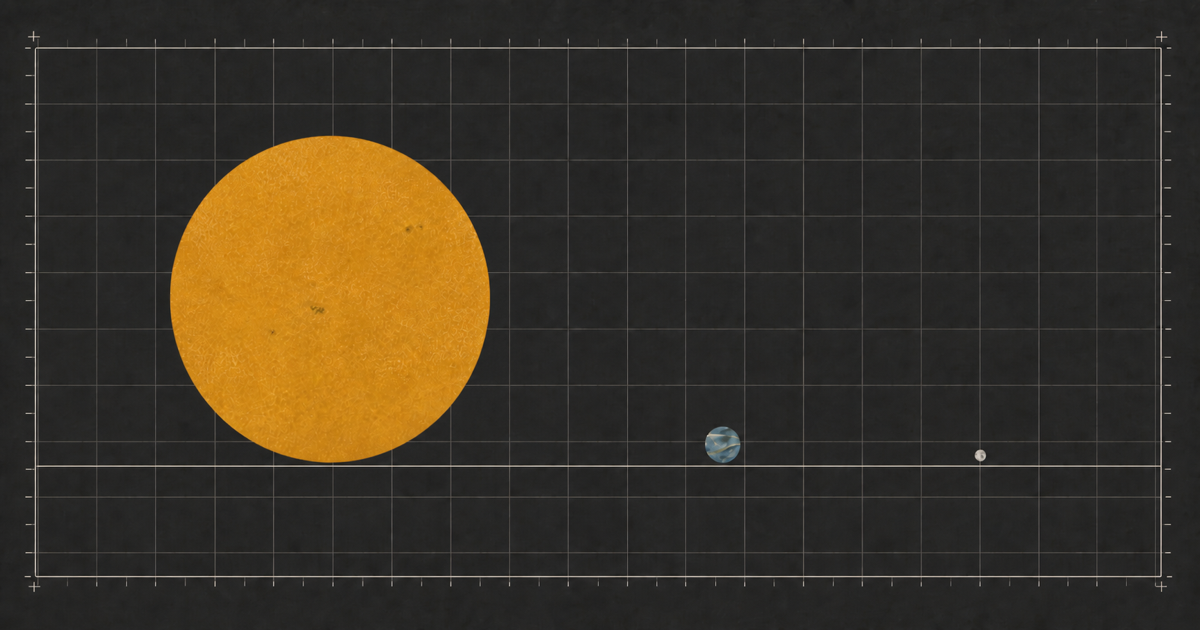
GPT-5.6 Is a Family: Sol, Terra, and Luna Explained
OpenAI introduced GPT-5.6 on July 9 as a family of three models: Sol, Terra, and Luna. Instead of hiding the cost-and-capability tradeoff behind a single automatic setting, the release gives developers and users three explicit choices.
All three are now in Poly's model catalog through OpenRouter. They support tools, reasoning controls, images, files, and a context window of roughly 1.05 million tokens. The main difference is how much capability you want to buy for each request.
GPT-5.6 Sol: Maximum Capability
Sol is the flagship. OpenAI positions it for complex professional work, including building artifacts, deep knowledge tasks, coding, and computer use. This is the model to reach for when the work is difficult enough that a better first attempt saves real time.
Good Sol tasks include:
- Complex software architecture and multi-file implementation
- High-value research or analysis with many constraints
- Long-horizon agents using several tools
- Final review of work produced by a smaller model
OpenAI's API price is $5 per million input tokens and $30 per million output tokens. That makes Sol an escalation model, not the default for every message.
GPT-5.6 Terra: The Practical Default
Terra keeps much of the family's reasoning and tool-use capability at a lower cost. For most serious daily work, it is the sensible place to begin: capable enough for coding, analysis, and structured writing without immediately paying flagship rates.
OpenRouter currently lists Terra at $1 per million input tokens and $6 per million output tokens. Routed prices can differ from a lab's direct API list, so Poly shows the current OpenRouter metadata in the model picker.
Choose Terra for product work, substantial writing, regular coding tasks, and agents where quality matters but request volume still counts.
GPT-5.6 Luna: Fast and Economical
Luna is the small model in the family. It is best for quick transformations, first drafts, extraction, classification, lightweight code assistance, and high-volume requests that are easy to verify.
OpenRouter currently lists Luna at $0.10 per million input tokens and $0.60 per million output tokens. Poly includes Luna in the free model selection, making it the easiest way to try the GPT-5.6 generation.
Luna is also useful as the first stage of a larger workflow: let it sort, summarize, or route the input, then send only the difficult cases to Terra or Sol.
A Better Way to Choose
Do not choose by model name alone. Choose by the cost of being wrong.
- Use Luna when the task is fast, repeatable, and easy to check.
- Use Terra for the bulk of meaningful knowledge and coding work.
- Use Sol when the task is unusually difficult, long-running, or expensive to redo.
Because Poly keeps the models in one interface, you can begin economically and move the same work up the family only when needed.
Try GPT-5.6 Luna Use GPT-5.6 Terra Use GPT-5.6 Sol
Source: OpenAI's GPT-5.6 announcement.